



The rapid intensification of network surveillance through the analysis of digital fingerprints and IP addresses renders classical methods of individual protection highly ineffective. Web resources have learned to read unique browser configurations, system settings, and geolocation, turning ordinary masking into a futile effort. The actualization of the need for advanced tools of dynamic identifier substitution to ensure real privacy prompts the search for solutions capable of completely disorienting monitoring systems.
How Dynamic IP Address Rotation Works
Automatic network address change occurs according to a pre-configured timer ranging from 2 to 30 minutes or is initiated forcefully via a special API request from the user. Such an approach completely disrupts the logic of analytical data collection, as trackers lose the ability to link sequential actions to a single digital profile. To configure the rotation parameters in the service provider’s dashboard, you need to navigate to the port settings section, select the toggle type, and press the configuration save button, after which the mobile proxy https://stableproxy.com/en/proxies/mobile begins to operate according to the specified algorithm.
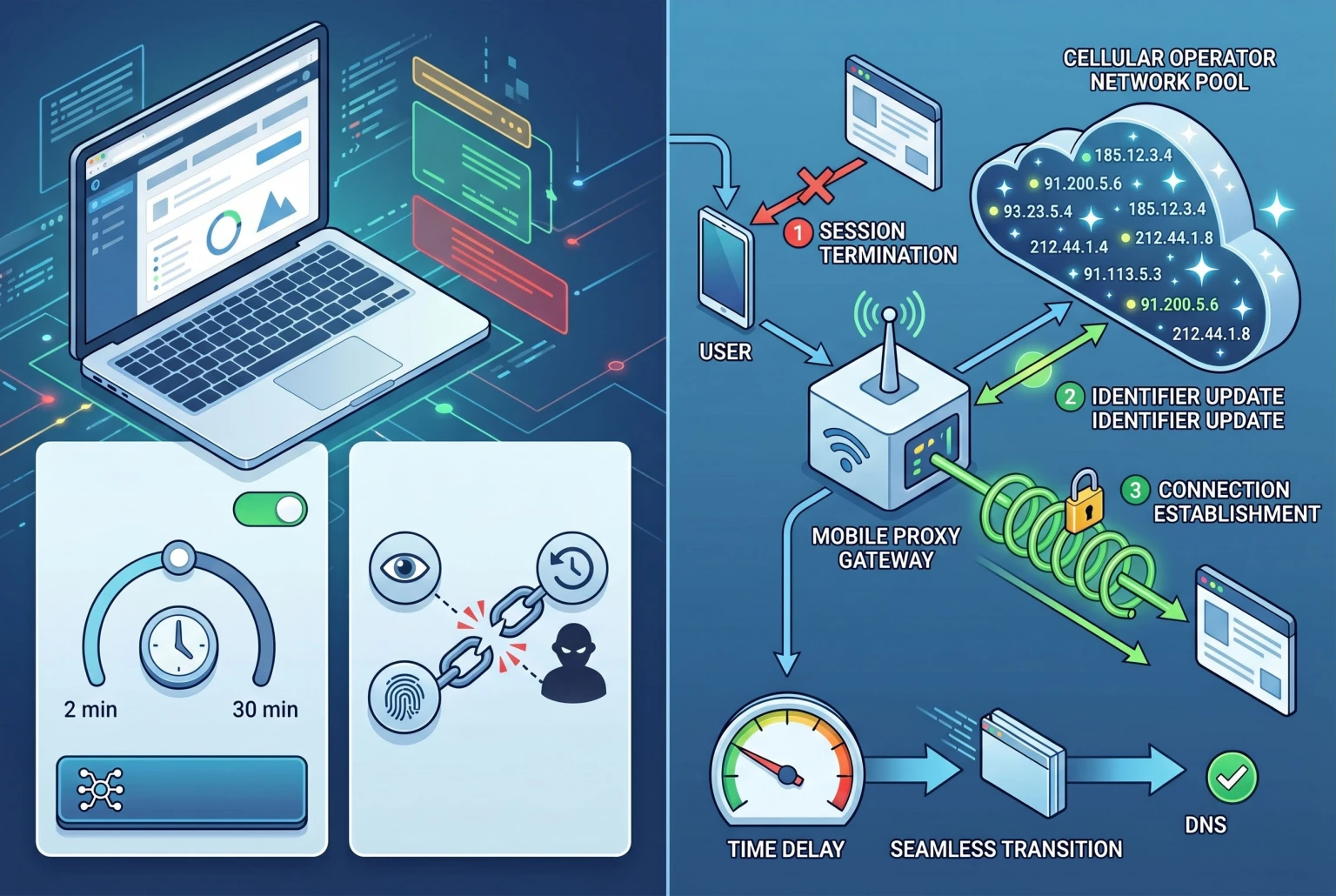
Technical stages of the process:
- Session termination. The current connection with the cellular operator is forcefully terminated at the gateway level.
- Identifier update. The equipment instantly sends a request to receive new network credentials from the general pool.
- Connection establishment. A new encrypted tunnel with the target resource is created under the guise of a different user.
The stability of the session during the switching of operator gateways is determined by the recovery speed of data packets and the absence of real DNS leaks. A correctly configured system ensures a seamless transition, minimizing time delays during address replacement.
Hiding Users with CGNAT Technology
Carrier-Grade NAT technology functions on the principle where a single public IP address of a mobile operator is simultaneously assigned to thousands of real network subscribers. This creates unique conditions for traffic masking, as external servers do not see an individual device, but a massive stream of diverse requests.
| Comparison criterion | Cellular networks (CGNAT) | Wired providers (Residential/Hosting) |
|---|---|---|
| Address distribution | One IP for thousands of devices | Dedicated or static IP per contract |
| System trust level | Maximum protection against blocks | High risk of individual ban |
The description of the crowd effect, which prevents protective algorithms from identifying or blocking a specific device without the risk of restricting access for many other legitimate users, explains the reliability of the technology. Anti-cheat and anti-fraud systems do not dare to block such addresses in order not to close access for regular clients. Mobile operators have a limited pool of IPv4 addresses, which forces them to use dynamic redistribution of resources between smartphones and tablets. For the end observer, all activity looks like the natural actions of cellular network subscribers.
Fingerprint Synchronization at the Operating System Level
A serious problem remains the detection of discrepancies between the operating system of the end device and the passive OS fingerprint (p0f) at the TCP/IP level, where MTU and TTL parameters are analyzed. If a user is working from Windows while the proxy server has a Linux kernel, security systems instantly record an anomaly.
Mismatch of network markers of the base OS and the proxy server is the main trigger for security systems.
Technical parameters of data packet synchronization ensure perfect compatibility of fingerprints, making it impossible for modern scanners of anti-fraud systems to detect anomalies. Specialized proxies automatically adjust packet headers to match the user’s connection type.
Bypassing Protective Filters of Anti-Fraud Systems

Address reputation evaluation systems, known as Trust Score, function based on the analysis of ASN (Autonomous System Numbers) lists. Server data centers of hosting providers have a low trust level by default, as they are frequently used for automated data scraping and spam campaigns.
Traffic verification logic:
- Request to the resource. The client sends a network packet to the target website.
- Marker analysis. The filter checks MNC/MCC codes and affiliation with cellular networks.
- Rating assignment. Traffic receives maximum trust status.
The specificity of traffic identification through mobile operator codes (MNC/MCC), which possess the maximum trust level with large platforms, allows for the masking of critically important operations. Thanks to this, requests successfully bypass strict filters. The step-by-step logic of request processing by protective filters, where mobile traffic is automatically removed from the high-risk zone compared to server data centers, guarantees unobstructed access. You can check current ASN parameters on specialized services like ipinfo.io.
Limits of Dynamic Masking Effectiveness
There is a direct correlation between the network level of masking and the overall privacy of the user, where address rotation acts as a fundamental element of protection.
However, security is a comprehensive process that requires control over cookies, WebRTC, and other information leaks through the configurations of the web browser itself.
The dynamic change of connection parameters radically alters the rules of digital defense, yet the ultimate effectiveness is always determined by the depth and objectives of a specific monitoring system.
For complete data isolation, network tools should be combined with strict rules of digital hygiene.